Kamis, 01 Juni 2017

Ten Questions Christians Should Ask of Their Entertainment

Ten Questions Christians Should Ask of Their Entertainment

Ten Questions Christians Should Ask of Their Entertainment
“But,” says one, “are we not to have amusements?” Yes, such amusements as you can take in the fear of God. Do what Jesus would have done.” —Charles Spurgeon
We live in an unprecedented age of entertainment. The average American spends over 10 hours per day in front of a screen.
Never before have we had so many options of TV shows, movies, music, blogs, social media and books available through so many different mediums (TV, Internet, Netflix, etc.). How can we make sure we faithfully follow Christ in this new entertainment age?
Discerning media consumption needs more than a litmus test of saying we shouldn’t watch excessive violence and sexuality (which is true). We need to understand the complex and often subtle effects of media on our lives.
Let me be the first to say that I love all sorts of digital media, and get much spiritual benefit from thinking through them in light of Scripture. My goal with this simple list is to help you think more Christianly about what you consume. As you read, ask the Lord how He may want you to change to make the most of your short life.

1. Do your entertainment choices add anything of value to your life?

For Christians, media consumption can range from a harmless diversion and relationship-builder to an idol-creating machine that wastes your life and effectiveness for the Lord. Think through how entertainment helps you achieve God’s purposes for you on earth. What value would be missing if you were to never flip your TV on again or to delete the apps that most distract you?

2. What desires do my entertainment choices cultivate in my heart?

What impact does entertainment have on your desires for God? If I’m not intentional, my media consumption cultivates sinful desires.
I remember watching a movie I didn’t expect to be so raunchy at a friend’s house in high school and feeling distanced from God afterward. I realized my desires changed after watching the movie. I no longer desired to pray or read the Word like before. My flesh craved the raunchiness I saw in the movie and I had to confess my sin to God and feed on His word for a renewed mind (Romans 12:2). Chances are my example doesn’t sound strange to you. Psalm 1 describes the blessed person as one who both constantly meditates on the Word of God and doesn’t sit in the path of the wicked. That night at my friend’s house I was sitting on a sofa in the path of the wicked as the movie’s warped messages subtly shaped my desires.
Not every entertainment choice will have the same effects, however. We can train ourselves during more ‘neutral’ entertainment to direct our gaze to the Lord in worship and ponder entertainment through the lens of the gospel (read The Stories We Tell by Mike Cosper for how to do this). Here are four questions that can help us with this:
  • How does this reflect the beauty and goodness of God’s creation?
  • How does this reflect the sinfulness of humanity?
  • How does this reflect our need for a Savior who changes hearts?
  • How might this deepen our longing for the restoration, peace and fullness of life we will enjoy for all of eternity?

3. Do you complain about wickedness in entertainment more than you pray for the people who make it?

Entertainment is filled with the silly, the sensational and the sinful. It can be a temptation to complain about the dumb/wicked things people do more than seeing them as sinners who need a Savior. Instead of complaining, pray for the salvation of those you could easily criticize (1 Timothy 2:1–4).

4. Does my entertainment consumption help me redeem the time in these evil days (Ephesians 5:16)?

Kent Hughes writes in The Disciplines of a Godly Man, “It is impossible for any Christian who spends the bulk of his evenings, month after month, week after week, day in and day out, watching the major TV networks or contemporary videos to have a Christian mind… A Biblical mental program cannot coexist with worldly programming.”
If the world compared your entertainment habits to your habits seeking God through prayer and Bible reading, what would they see as most important for you? Life is a breath, a vapor, and grass that quickly fades. Don’t let the easy things in life steal from the more valuable.

5. Do I want my entertainment habits to be imitated by my children (or those I lead)?

If you are a parent or leader of any kind, be warned that you pass on your bad habits to the next generation. You are also susceptible to let your kids be discipled by entertainment and leave them as pleasure-loving materialists with dull hearts toward spiritual truth. Seek to set a godly example in your consumption of entertainment.

6. What does this entertainment glorify?

Every entertainer holds values, and many entertainers promote their values through what they produce.1 Many times their values are purely financial; meaning they would make whatever would sell. Rarely do Christian values like wisdom, integrity, the fear of God or exalting of Jesus Christ ever get airtime. Thus, we must ask ourselves what values does a certain TV show or movie promote? If we fail to discern this, the desires of our heart will be formed and pulled away from Scripture. (See #2.)

7. Does TV amplify my gossip?

Gossip looks different for different people. Gossip for many women might mean criticizing an actress’ weight or what they wore to XYZ awards show. For men who scoff at celebrity culture, they might not realize they do the same thing when it comes to the athletes they like or dislike. Just because we may not know someone personally doesn’t mean we have free reign to gossip.
“Let no corrupting talk come out of your mouths, but only such as is good for building up, as fits the occasion, that it may give grace to those who hear.” Ephesians 4:29

8. What are you more willing to compromise: your Christian beliefs or your entertainment choices?

Again, this doesn’t assume that all entertainment is all bad, but this question should help you unmask an idol if one exists. Be careful if you often find yourself saying or thinking, “I know as a Christian I shouldn’t watch __________, but…” This could be a sign you love entertainment over God.

9. What entertainment can you sacrifice for a more God-honoring life?

My wife and I choose to live without cable TV and thus hardly watch any TV. This helps us not only save money but also steward our time by not getting sucked into shows (or games) that add no value to our lives. I also choose to not have Facebook or Twitter apps active on my phone to remove another temptation to waste time. Less is more and life is fuller when we make the right sacrifices to honor God.

10. Do your entertainment choices help you fulfill your God-given callings?

Entertainment used rightly can serve a great purpose: to help us enjoy the life God has given us, to bring us closer to those we love, and to have a greater understanding of the complex world we live in. It can also distract us from our God-given callings.
If entertainment is only about passive consumption and doesn’t motivate you to actively create or think deeply, your entertainment choices are unhealthy. If “fellowship” around entertainment is the main basis of relationships for you, your entertainment choices are unhealthy.
God wants more from us than amusing ourselves to death (to borrow a phrase from Neil Postman). He wants to be our greatest delight. He wants greater Christ-likeness and abundant lives for His children.1 He wants to lead and guide us with His still, small voice. Are you listening?
My prayer is that the Lord would use these simple questions to shape your mind and heart to love Him more in all you do.
This article originally appeared here.

Spiritual Strength

Spiritual Strength
“When I am weak, then I am strong.”
2 CORINTHIANS 12:10

The way of the world says that in order to be stronger, we must build ourselves up and seek strength and dominance over others. Christians everywhere are keenly interested in how to be increased, how to be stronger, how to take authority, how to rise up, how to get more. They look for methods, formulas, and techniques for becoming bigger and better. The results have been disappointing. Many mistakes have been made and many people have been hurt and disillusioned.

The Lord has a different approach for us to take. He invites us to accept weakness in order to be strengthened. We do not become strong by embracing strength, but by embracing weakness! This is the secret of all spiritual power. When Paul learned this secret he was able to say, “When I am weak, then I am strong.” This makes no sense to the natural man.


​​​​​​​Source: “Embrace the Cross” by Chip Brogden
http://www.chipbrogden.com/embrace-the-cross

Like this? Share your comments:
http://www.chipbrogden.com/may30

I am your brother,
Image
Chip Brogden 

3 Ways to Share Tech With Seniors

3 Ways to Share Tech With Seniors

By
Email this Print version
Three idea starters for using technology to reach the seniors in your community.
Computer Help. Host an evening for seniors to bring in their laptops and ask all of their questions, from understanding how their programs work to navigating the internet. Be sure to show them around your church’s website as well as other sites they may find helpful—the local library, their bank, etc.
Social Media. Hold a class or a series of classes to help seniors learn the ins and outs of Facebook, Instagram and Twitter. Consider bringing in teens from the youth group to help teach. You can even show seniors how to FaceTime and/or Skype with their children and grandchildren.
iPod drive. Collect gently used iPods and then donate them to Music & Memory—an organization that helps people in nursing homes and other care facilities suffering from Alzheimer’s and dementia to tap into memories through music. For more info, check out MusicandMemory.org.
Find more seniors outreach ideas »

Going to the “No-Go” Area

No Matter What

There was a place in Sierra Leone the locals didn’t talk about. It was a “no-go” area. Loko Town. A secret location on a mountain where evil things were done. There, a manipulative occultist ruled over a gang of violent men who terrorized the surrounding villages. And if that wasn’t enough, Ebola had broken out in the area.
Would you ever dare to trek into such a place?
Our EHC pioneer missionaries did.

Leading Millennials? Core Issues You Need to Know

Leading Millennials? Core Issues You Need to Know

Leading Millennials? Core Issues You Need to Know
According to a Pew Research study, Millennials have surpassed Baby Boomers as the nation’s largest living generation. Millennials, whom we now define as those ages 20-36, number over 75.4 million, surpassing the 74.9 million Baby Boomers (ages 53-71). Businesses such as Goldman Sachs are studying this trend, recognizing they will “change the ways we buy and sell, forcing companies to examine how they do business for decades to come.”
I too have been thinking about this new culture of Millennials as they increasingly become the dominant culture in many of our churches. What are the critical issues we must address to make mature disciples, build sustainable communities and reach the world effectively? The following are my top five:
  1. Practice Presence in a Digitally Connected World. Millennials are the first generation where social media and smart phones are the air they breathe. But screens can’t teach empathy or face-to-face conversation. We have an amazing opportunity to offer Jesus through our authentic presence—with eye contact, vulnerability and attunement. And if we teach them how to practice presence with themselves and others, they will passionately bring it to their families, friendships and workplaces.
  2. Be Alone in Community. Millennials’ longing for community is deep and profound. Yet healthy communities are built on people who are able to be alone and who are comfortable in their own skin. Integrating silence, stillness and solitude into our discipleship and churches is, I believe, particularly critical for this generation.
  3. Embrace Limits in “Trying to Do It All.” Millennials are particularly overwhelmed and overloaded in an effort to “make it” in our intensely competitive worlds. From sports to academics to the workplace, there has been a significant increase in pressure to perform and not miss out (aka FOMO). The problem is we are human and limited. God is God. We are not. Trusting God with our limits has been with us since the Garden of Eden. We offer Millennials a gift when we model and teach an applied theology of limits.
  4. Learn Healthy Relationships in Conflicts. The longing for life-giving, healthy relationships may be the greatest felt need of Millennials, especially as it relates to conflicts—with friends, parents, co-workers, bosses, dating relationships and marriage. When we offered The Emotionally Healthy Relationship Course last October at our church, 225 people signed up before we had a chance to advertise it. Most were Millennials. We had to close registration. They have inherited the brokenness and fragility of my Boomer generation and desperately want to be learn a better way.
  5. Cultivate a Deep Inner Life in Impacting the World. Millennials want to change the world. That is a God-given, wonderful desire. The problem is that it is not sustainable without an inner life rooted in God. We are uniquely positioned in the church to meet this profound need. To do this well, we must draw from the multiracial, global church and the riches of different traditions going back to the Church Fathers (2nd to 6th centuries).
This is my list. What might you add?
This article originally appeared here.

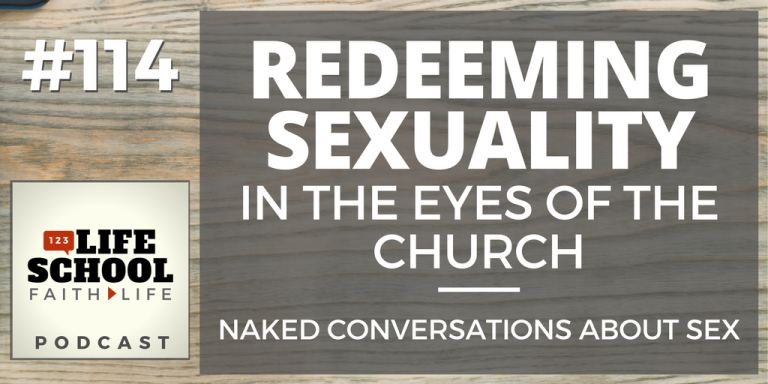
A Naked Conversation About Sex

I hope your holiday was as awesome and restful as mine was. Team K was in full bloom this weekend!
 
Right now I’m excited to tell you about this week’s Lifeschool podcast– my favorite episode we’ve done so far!
 
Nothing has exposed the gap between the church and the broader society quite like the cultural argument over sexuality. Relationships, identities, orientations and even seemingly straightforward concepts such as gender have cut battle lines between the church and the world.
 
In this episode we speak to Debra Hirsch, author of the book Redeeming Sex , and discover a holistic, biblical vision of sex and gender that honors God and offers good news to the world.
 
 
Deb reflects on some of her own journey with us as she brings fresh language and insightful definitions of sexuality into the context of the church.
 
In This Episode You’ll Learn:
  • Why sex and sexuality is such a “hot button” issue for the church
  • Why we need a much broader definition of human sexuality
  • How our understanding of sexuality can deepen our relationship with God
  • How the search for intimacy in relationships mirrors our search for God
  • What the church and Christians need to wake up to concerning sex
 
–Caesar
 
P.S. If you have any questions or thoughts, please hit Reply...we love hearing from you.

Wonder Woman movie: Want her on your side?


Wonder Woman movie: Want her on your side?

By Rusty Wright, Special to ASSIST News Service (ANS Movie Review)
WWposter Wonder ANSsizeMOUNT HERMON, CA (ANS – May 31, 2017) – She deflects speeding bullets with her bracelets, swan dives off a tall cliff to rescue an Army officer who's crash landed in the ocean, and dazzles with spectacular sword-and-shield combat moves.  Her golden lasso compels you to tell the truth.  She's a friend/companion to the Army officer, a princess to her Amazonian sisters.  And she does it all with power, grace, wisdom, and…wonder.
If you were choosing teammates to defeat the bad guys, would you pick Wonder Woman?
Created in 1941 as a kinder, gentler comic book superhero, she most recently appeared onscreen in 2016's Batman v Superman: Dawn of Justice, intervening in the nick of time to help the Man of Steel and the Caped Crusader.  They'll all return this November in Justice League.  But first, Diana Prince/Princess Diana (Gal Gadot) gets her own film – filled with action, excitement, nobility (parts made me want to cheer), plot twists, compassion, and love – to remind the world of her roots, her mission…and femme power. 
Strength and beauty
Wonder Woman's comic book creator, William Moulton Marston, was a Harvard-trained psychologist with a complicated, multifaceted life. 
Superman (1938 comic launch) and Batman (1939) were becoming too violent for many readers' tastes.  Seeking a family-friendly solution, publisher M.C. Gaines hired Marston, who recommended a "female superhero" with powers related to "love and truth and beauty" to inspire and sell comics to girls.
Strongly influenced by the women's suffrage movement, Marston wanted "to create a feminine character with all the strength of Superman plus all the allure of a good and beautiful woman."  He once admitted, "Frankly, Wonder Woman is psychological propaganda for the new type of woman who, I believe, should rule the world."
Feminist icon
SteveandDiana ANSsizeWonder Woman has indeed become a feminist icon, gracing the cover of Ms. Magazine three times.  Gloria Steinem – huge fan – complained to DC Comics when writers stripped her heroine of magical powers.  The publisher restored them.
The United Nations named Wonder Woman its ambassador for female empowerment – until a slew of UN staffers and others complained she was too white, too American, and too curvaceous. 
Regarding creator Marston's life: his wife (Elizabeth Holloway), his lover (Olive Byrne) and he all lived together.  Each woman bore two children.  Marston also invented the lie detector (think Wonder Woman's golden lasso) and the famous DISC psychological personality model (Dominance, Influence, Submission, and Compliance contribute to Diana's mission).
Olive Byrne's aunt was Margaret Sanger, whose feminist views also influenced Marston. 
Greek and Roman mythology figured prominently in Marston's youth, so it's not surprising that Wonder Woman's saga is steeped in such lore.  She hails from Themyscira, a fictional island with only female inhabitants who fled Greece to escape enslavement by males.  She worships and interacts with Greco-Roman gods. 
Superhero spirituality
Many comic book/cartoon characters exhibit spiritual links.  Superman often is a Christ figure.  (A father sends to earth his only son, who becomes a savior.)  Charles Schultz wove numerous spiritual themes into PeanutsThe Simpsons depicts multiple faiths including Christian, Jewish, Hindu, Muslim, and Buddhist.
Some find biblical parallels in the Wonder Woman canon.  Amazons first lived in an earthly paradise, then were cast out (Eden allusions?).  The comic book Wonder Woman died, rose again, ascended to heaven for a time, then returned to earth.  Jesus certainly elevated the status of women (a central Wonder Woman cause).  In contrast to social norms, he taught, befriended, and traveled with them.  Women were the first at his empty tomb, first to see him alive again, first to spread that news.
The biblical Deborah was a judge, prophetess and military strategist with wisdom somewhat similar to Diana's.  She instructed Barak, a male military leader, to engage in a strategic battle.  Barak replied, "I will go, but only if you go with me."  Deborah chided Barak:  "Very well … I will go with you. But you will receive no honor in this venture, for the Lord's victory over Sisera [the opposing commander] will be at the hands of a woman."  Another woman, Jael, used guile and stealth to kill Sisera. 
Do humans need superheroes?
Dianaonhorse ANSsizeOf course, significant differences exist between Greco-Roman deities and the biblical God.  The former were multiple, could be capricious, and exhibited flawed behavior.  The latter is depicted as being "one," unchanging and "holy." 
In any case, superhero stories remain widespread, perhaps because they tap human needs to negotiate a hostile world.  Fantasizing about vanquishing evil and darkness – or cheering imaginary characters that do – can provide temporary diversion from life's fears. 
Consider this: Many who embrace God as their "superhero" would say he is reality, and that he sees a deep longing for deliverance in human hearts.  Could fictional-hero stories' popularity reflect genuine human desire for divine connection?
Something to chew on as you enjoy watching your superheroes this year.
Rated PG-13 (USA) "for sequences of violence and action, and some suggestive content." 
www.WonderWomanFilm.com   Opens June 2 (North America)   International Release Dates
Copyright © 2017 Rusty Wright
Photo captions: 1) Wonder Woman poster. 2) Captain Steve Trevor (Chris Pine) and Wonder Woman (Gal Gadot). Copyright © 2017 Warner Bros. / Ratpac/ Photo: Clay Enos / TM & (c) DC Comics. 3) Wonder Woman (Gal Gadot). Copyright © 2017 Warner Bros. / Ratpac. Photo: Clay Enos / TM & (c) DC Comics. 4) Rusty Wright.
RustyWright ANSsizesmallRusty Wright is an author and lecturer who has spoken on six continents.  He holds Bachelor of Science (psychology) and Master of Theology degrees from Duke and Oxford universities, respectively.  www.RustyWright.com
#     #     #
Editors: For access to these images and more, check here, here, here, here, here, here, here, and here.
** You may republish this or any of our ANS stories with attribution to the ASSIST News Service (www.assistnews.net). Please also tell your friends and colleagues that they can get a complimentary subscription to ANS by going to the website and signing up there.